
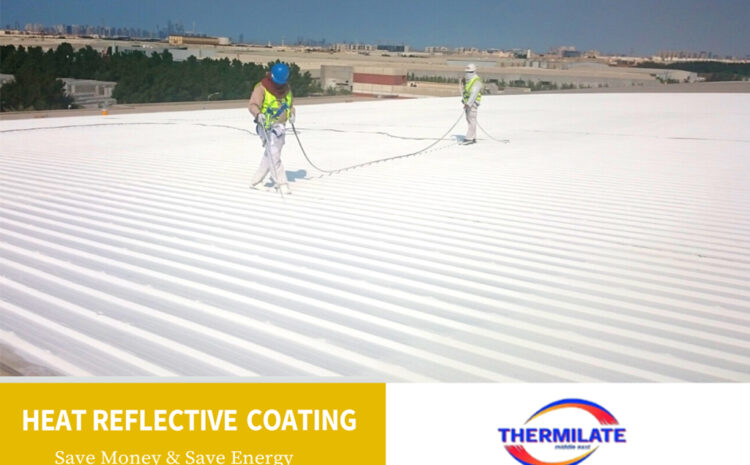
Heat Reflective Coating in UAE: How Reflective Insulating Coatings Cut Cooling Costs
If the top-floor rooms in a building run noticeably hotter than the rest, and the AC bill climbs every summer without fail, the roof is usually where the problem starts. Flat roofs and exposed walls absorb solar heat all day and pass a good share of it straight into the space below. This is the exact problem heat reflective coating in UAE is used to solve, and it’s worth understanding how it actually works before choosing one.
The Mechanism, Explained Simply
Heat reflective coatings aren’t just white paint with a marketing label. Thermilate’s coating is built around ceramic micro-spheres, roughly 30 to 100 microns in diameter, suspended through the coating. As the coating cures, these micro-spheres form a thermal barrier across the surface.
In a hot climate like the UAE’s, that barrier works by reducing the amount of solar heat that gets absorbed into the building fabric in the first place, which is what actually brings cooling costs down rather than just masking the heat. Interestingly, the same mechanism works in reverse in cooler climates, where it helps reduce heat loss instead.
The Condensation Problem Nobody Mentions
Most people search for this purely as a heat solution, but anyone who has dealt with a poorly insulated roof knows condensation is often the second half of the problem. Temperature swings between day and night cause moisture to form on interior surfaces, which over time leads to damp patches, mould, and deterioration of the roof structure itself.
This is where reflective insulating coating Dubai buyers often find the real value. Thermilate’s system pairs the ceramic micro-sphere barrier with a resin-based formulation and waterproofing at joints and seams, addressing heat and condensation as one combined system rather than requiring two separate products applied by two separate contractors.
Where It Gets Applied
The primary use case in Dubai’s climate is flat and low-slope roofs, along with exterior walls that see direct sun exposure for most of the day. These are the surfaces doing the most work in terms of heat absorption, and where a reflective coating has the clearest measurable impact on indoor temperature.
What’s Worth Verifying Before Hiring Anyone
Not every coating sold as “heat reflective” is backed by the same standards, so it’s worth checking a few things before signing off on a contractor. Thermilate Middle East is an associate of Thermilate Technologies in the UK and has been active in the region for 25 years, with more than 5,000 completed projects and over 2,500 clients served. The company holds ISO 9001 and ISO 45001 certification and is an approved contractor with Dubai Civil Defence. These aren’t just credentials to list, they’re the kind of detail worth confirming with any contractor before committing to a roof or wall coating project, since they indicate the work has been through recognised quality and safety checks rather than just a sales pitch.Thermilate Middle East is based in Dubai and works across the UAE on heat reflective and waterproofing coating projects. To discuss a project or get a site assessment, contact the team at +971 4 2511 390 or via email at tmedub@eim.ae.
FAQs (Frequently Asked Questions)
It’s most commonly applied to flat and low-slope roofs, which are the most exposed to direct solar heat gain. Application details vary depending on the existing roof surface and condition.
Yes. Thermilate’s system combines the reflective coating with waterproofing and joint sealing, so heat reduction and moisture protection are addressed together rather than as separate treatments.
use in the UAE is for reducing solar heat gain.
